« Back to our fieldbook
Many ways to work with place
Bioregioning didn’t come out of nowhere. It belongs to a wider family of approaches that start from a place instead of a sector. It helps to understand that background first.
Place-basedis the broad practice. It means organising investment and change-work around a geographically coherent unit (a neighbourhood, a city, a region) rather than splitting efforts across sectors. It starts from a simple observation: systems are spatial. Energy, housing, mobility, food and care don’t just interact in theory. They interact here, in this place, between these people.
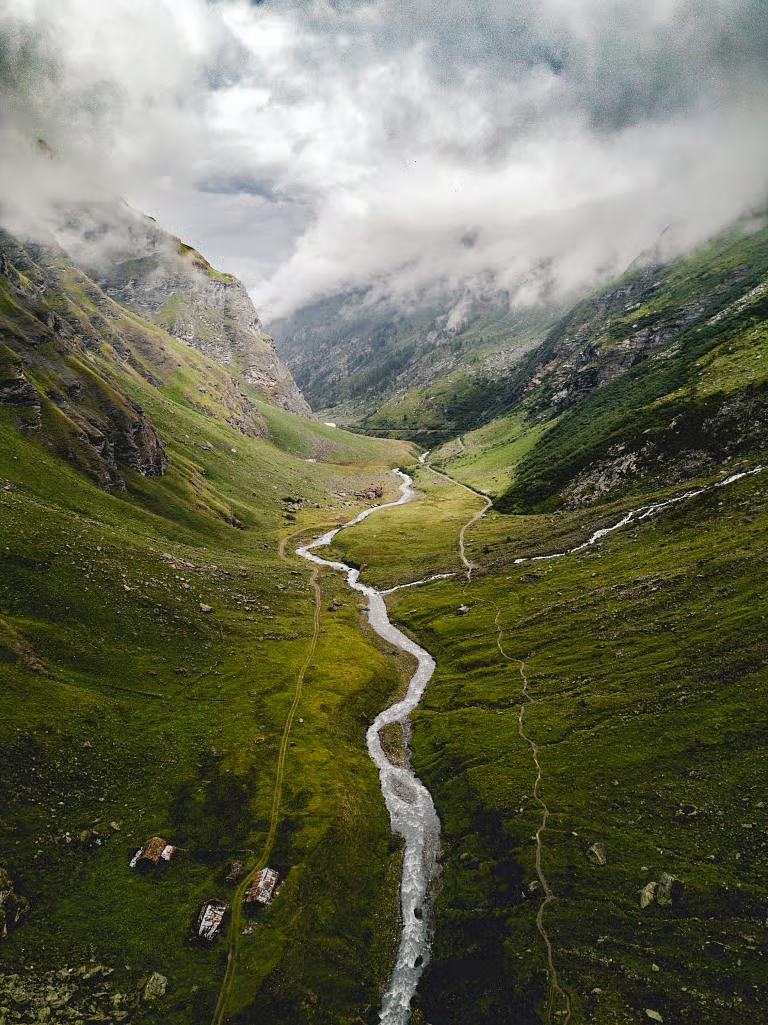
Bioregioning goes a step further. It asks: what if the right unit isn’t the administrative border we inherited (the municipality, the province, the country), but the ecological one? The watershed. The landscape. The living system that shapes how water, soil, species and communities relate to each other. A bioregion is what you get when you take place-based thinking but let ecology draw the map.
From a fort to a watershed
The easiest way to explain bioregioning is by picturing it as a ladder of scales. Each step up adds complexity, and changes the question you have to ask.
• A neighbourhood. In Diest (Belgium), a cooperative is turning a 19th-century military citadel, left empty by the army in 2011, into a living lab for makers, entrepreneurs and local associations. The question here: who gets to decide what a place becomes?
• A city. Leuven 2030 manages the transition of an entire city as one portfolio, instead of a collection of separate green projects (more below).
• A region. Metabolic’s Place-Based Transition Funds playbook shows how a region can combine energy, mobility, nature and social projects so they help each other succeed, with blended finance covering the projects that are essential but can’t pay for themselves.
• A landscape. Commonland restores landscapes over 20 years or more, and measures success in “4 Returns”: inspiration, social, natural and financial.
• A bioregion. Where the borders follow the water, the soil and the culture that grew around them. That’s where this chapter goes.
In practice: Leuven 2030 (place-based, but not bioregional)
Since 2013, Leuven 2030 has been working on one question: how do you transition an entire city (energy, buildings, mobility, industry) in a way that is fast enough, fair enough and financially viable? Their answer: treat it as a system, nota project. Citizens, companies, knowledge institutions like KU Leuven and the city government work on one shared portfolio. Its climate fund combines renovation and energy projects that earn a stable return with social projects that can’t, so the first help unlock the second. They even hired a financial architect, whose job is to translate between the city’s ambition and the logic of capital. It’s a strong example of place-based work.
Why go deep on bioregions?
Place-based work at every one of these scales deserves attention. So why does this chapter zoom in on bioregions? Three reasons.
- The borders make relationships visible. Administrative borders cut straight through rivers, forests and food systems. When the border follows the watershed, upstream and downstream suddenly share a destiny. What happens to the soil on one farm shows up in someone else’s drinking water, and in the next flood.
- It’s where our own conversations keep landing. Several of the projects we’ve been exploring, from Quípar Valley in Spain to Salmon Returns on the Pacific coast of North America, work at exactly this scale.
- The practitioners are in the room. Karin, Michiel, and Nicole have been doing this work for years, which lets us go further than theory.
Why this scale, and why now?
Faced with overlapping crises (climate, biodiversity, inequality), our collective responses so far have fallen short. Karin and Michiel see this mainly as a problem of scale. Global approaches get split into silos and caught up in politics. National approaches follow short election cycles. Sector approaches miss how energy, real estate and agriculture affect each other.
A bioregion sits in between. Big enough to matter, small enough that people still know each other. Metabolic puts it like this: “Taken individually, each initiative might appear modest against the scale of what is needed. In the aggregate, a growing patchwork of place-based efforts starts to build a resilient substrate –one from which healthier economies, restored ecologies,and more cohesive communities can take root, connect, and scale.”
If that sounds familiar: in Chapter 1, we quoted Ilya Prigogine on “small islands of coherence in a sea of chaos” that can shiftan entire system. Bioregions might be exactly those islands.